GigSmart Get Gigs
- 3.6
- Rating
- 1.00M
- Installs
- Free
- Price

 Analysis by App-foxy
I approached GigSmart Get Gigs as a practical work-finding app rather than another general business tool. Its purpose is straightforward: help people discover nearby gig opportunities and move from searching to earning without building a complicated process around it. That focus makes it appealing when I want flexible work quickly, but it also means the experience depends heavily on location, available listings, and how carefully I manage each opportunity.
Developed by GigSmart, Inc., the app is free and aimed at an Everyone audience. It belongs in the business category, although I found it more useful to think of it as a mobile marketplace for short-term work. The current release is version 4.21.0, and it supports devices running Android 7.0 or later. With more than a million installs, a 3.8 average from roughly seven thousand ratings, and about three thousand written reviews, it has clearly attracted a substantial audience without presenting itself as a universal replacement for a traditional job board.
How GigSmart feels when speed matters
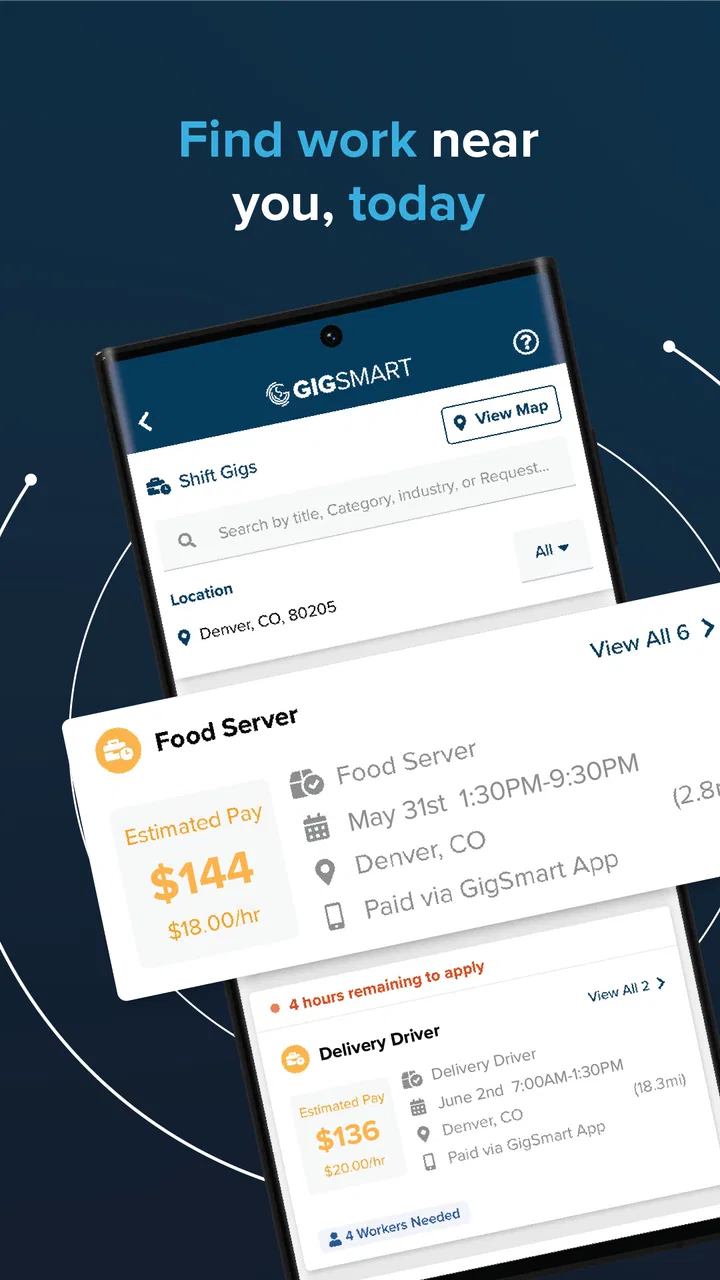
The strongest reason to try this app is the short path between opening it and looking for local work. Instead of starting with a long résumé-building exercise or browsing a broad employment website, I can use it with a more immediate question in mind: what kind of work is available near me, and can I realistically take it? That makes the app particularly relevant for someone filling a gap between jobs, adding income around an existing schedule, or looking for occasional work rather than a permanent position.
You May Also Like

 Blood Strike: 2.5 Anniversary
Blood Strike’s Loadouts Turn Every Drop Into a Tactical Gamble
A close look at Blood Strike’s custom loadouts: how fast access to signature weapons reshapes its battle royale rhythm, rewards preparation, and narrows the gap between fights.

 Pandora - Music & Podcasts
Pandora’s Music Is Easy to Start, but Harder to Recover
Pandora’s strength is its low-effort path from a seed to a station. Its weak spot is how much confidence it asks you to place in connection, setup, and quiet recovery.

 8 Ball Pool
 Is Built on Rivalries, Rematches, and Routine
A close look at the rivalries, rematches, shared routines, and unanswered safety questions that turn a quick pool match into a persistent mobile community.

 Samsung Music
’s Quiet Strength Is Playing What You Already Own
Its reach comes less from spectacle than from dependable access to a personal library. That simplicity is both the app’s strongest retention engine and its ceiling.

 AccuWeather: Weather Radar
AccuWeather Review: A Quick, Clear Forecast for Everyday Decisions
For everyday plans, the best forecast is the one you can understand quickly. AccuWeather makes rain timing, radar, and local conditions easy to act on, with a few trade-offs.

 Hill Climb Racing
Why Hill Climb Racing Still Turns Crashes Into One More Run
A tiny car, a bumpy hill and one more upgrade: Hill Climb Racing keeps resurfacing because its simple chaos makes every near-miss feel personal.
More From Our News Desk



That speed should not be confused with guaranteed instant employment. The app can make access to opportunities feel faster, but the actual result still depends on the jobs visible in my area, their requirements, timing, and whether I am a suitable candidate. I would therefore treat the quick-start experience as a way to reduce searching friction, not as a promise that every session ends with a booking.
My most useful approach is to decide my limits before searching. I would set a realistic travel range, identify the hours I can genuinely commit to, and decide which types of tasks I am willing to accept. Without that preparation, a fast stream of possibilities can become distracting. A listing may look attractive until travel, timing, or the practical demands of the shift are considered.
Compared with a conventional job board, GigSmart Get Gigs feels more oriented toward immediate, local opportunities. Traditional boards are usually better for building a long-term career search, comparing detailed employer profiles, or applying for permanent roles. GigSmart is more compelling when flexibility and speed matter more than a lengthy application history. That distinction is important because someone searching for a salaried position may find the app too narrow, while someone seeking short-term work may find a general job board unnecessarily slow.
A realistic day-to-day use case
Imagine I have an open weekday because a regular shift was cancelled. I could open the app, review nearby options, and focus only on work that fits the hours I actually have. Rather than applying broadly and hoping for a response later, I can use the mobile format to make a more immediate decision. If I find a suitable opportunity, I still need to read the details carefully and make sure I can meet the expectations before committing.
That workflow is especially useful for people who already understand their availability. It is less useful for someone who needs extensive career guidance, wants to compare full employment benefits, or prefers to negotiate every detail before showing interest. The app helps organize access to gigs; it does not remove the judgment required to choose a good one.
What happens during heavier use
Light use is simple: open the app, inspect opportunities, and decide whether anything fits. Heavier use is different. Repeatedly checking for new work, comparing several listings, and revisiting details can turn the experience into a more demanding browsing session. On a smaller phone, switching between screens or rereading requirements may feel less comfortable than using a desktop job site, especially when I am trying to compare multiple possibilities at once.
I would avoid treating every new listing as a reason to apply immediately. A better workflow is to create a short mental checklist: location, start time, expected duration, task type, and whether the opportunity fits my experience and transport options. This saves time later and reduces the chance of accepting work that looks convenient only at first glance. It is one of the app’s less obvious trade-offs: fast discovery is valuable, but fast decisions are not always wise.
For people who check the app frequently, notification habits and battery use become practical considerations. I would keep alerts useful rather than allowing every possible update to interrupt the day. I also prefer checking opportunities when I have enough time to read them properly, rather than making a rushed choice while commuting or handling another task. The app’s value comes from timely access, but attention remains the scarce resource.
I found the mobile-first design best suited to short sessions spread across the day. It is convenient to check from a phone, but I would not expect it to replace a larger screen when I need to plan several shifts, track personal commitments, or compare work options in detail. That is not a flaw unique to GigSmart; it is the natural compromise of a service designed for quick access from a mobile device.
Reliability is more than whether the app opens
When I judge a work app, reliability includes several layers. The application needs to open consistently, present opportunities clearly, preserve my progress, and make it easy to understand what I am agreeing to. A technically stable screen is not enough if I overlook an important requirement because the information is difficult to review. For this reason, I would pay attention not only to responsiveness but also to how confidently I can complete each step.
The app’s established user base gives me more confidence than an unknown, newly released tool. Its release history also shows that it is an actively maintained product rather than a one-off experiment. Still, a large audience does not guarantee that every person will have the same experience. Local availability, device condition, network quality, and the number of suitable gigs nearby can all affect how reliable the service feels in practice.
My recovery advice is simple: if a page does not load or a session behaves unexpectedly, I would first check the connection, close and reopen the app, and avoid repeatedly submitting the same action until I know whether it went through. For anything involving a work commitment, I would keep a personal note of the opportunity details and timing. That is not glamorous, but it gives me a reference point if I need to recover from an interrupted session or verify what I intended to accept.
I also would not rely on the app as my only source of income planning. A gig marketplace can be useful, but availability may change and a suitable opportunity may not appear when I need it. Keeping another job-search method available—such as a conventional employment site, local contacts, or direct applications—makes the overall plan more resilient. GigSmart works best as an active tool in a broader strategy, not as a guarantee of steady work.
Device limits and everyday practicality
Support for Android 7.0 or later makes the app accessible to people who are not using the newest phones. That is a meaningful advantage for gig workers who may keep an older device rather than upgrade frequently. At the same time, older hardware can still affect the experience through slower app launches, limited storage, weaker battery health, or reduced multitasking performance. The operating-system requirement tells me the app is broadly reachable, but it does not make every older phone equally comfortable for frequent use.
On a modest device, I would keep enough free storage for normal app operation, close other demanding applications when browsing for work, and avoid relying on a nearly depleted battery during an important search. These are sensible precautions because a work opportunity can be time-sensitive. A phone that is technically compatible may still be a poor tool if it struggles whenever several applications are open or the connection is unstable.
Resource demands also depend on how I use the app. A quick check for nearby work should be less demanding than extended browsing with repeated refreshes and several other apps running. I would not describe GigSmart as something that needs a high-end phone, but I would expect the smoothest experience from a reasonably maintained device with dependable connectivity. If my phone is old enough to lag in ordinary applications, the app may feel less responsive during busy searches even though it meets the stated operating-system requirement.
For iPhone users, the important practical question is not only whether the app is available on the platform, but whether their particular device and current software provide a comfortable experience. I would approach installation with the same common sense: keep the operating system supported, maintain free space, and make sure the phone can handle notifications and mobile browsing reliably. The service is meant to be useful away from a desk, so device readiness matters more than it would for a tool I use only occasionally at home.
Who will get the most from it
I think GigSmart Get Gigs is a strong fit for people who value flexibility and want a direct way to explore local work. It can suit students with changing schedules, workers looking for additional shifts, people between longer-term roles, and anyone who prefers checking opportunities from a phone instead of visiting multiple websites. It is also useful for someone who already knows what kind of work they can do and simply wants a more focused place to look.
The app is less suitable for a person who needs a predictable salary, a clearly defined promotion path, or extensive employer research before applying. It may also disappoint someone living in an area with few relevant opportunities. In that situation, a larger general job board or direct contact with local employers could provide broader coverage. The right choice depends less on the app’s interface than on whether flexible local gigs match my actual goal.
I would also be cautious if I am new to gig work and tend to accept the first available option without checking the practical details. Flexible work can sound appealing, but travel costs, schedule conflicts, physical demands, and preparation time can change the real value of an opportunity. The app can help me find work; it cannot decide whether that work makes sense for my circumstances.
Small habits that improve the experience
My first tip is to search with a purpose instead of scrolling indefinitely. Before opening the app, I would decide whether I am looking for work today, this week, or only during a particular time window. That simple distinction makes the results easier to evaluate and prevents me from treating every listing as equally relevant.
My second tip is to compare the complete commitment, not just the headline appeal. I would consider the journey, preparation, timing, and likely effect on the rest of my day. A nearby opportunity with awkward hours may be less practical than one slightly farther away that fits my schedule cleanly. This is the kind of judgment a short store summary cannot provide, but it has a major effect on whether the app actually helps me earn efficiently.
My third tip is to use the app as a record of decisions, not merely a stream of possibilities. Once I have chosen an opportunity, I would note the relevant time and location in my own calendar or notes. That gives me a second reminder and reduces dependence on finding the same information again under pressure. It is particularly useful when I am managing multiple commitments or switching between GigSmart and other work sources.
A fourth useful habit is to test the app before I urgently need it. I would install it, check how easily I can browse, and become familiar with the basic flow on a normal day. Then, if an unexpected free afternoon appears, I am not learning the interface while trying to make a time-sensitive decision. This also lets me discover whether my phone, connection, and notification setup are suitable before the app becomes important.
How it compares with familiar alternatives
Against broad employment platforms, GigSmart’s advantage is focus. General job sites often contain more long-term roles and richer career-search tools, but they can require more filtering and patience. GigSmart makes more sense when I want to investigate local gig work without committing to a traditional application process. The trade-off is breadth: a general platform may offer more varied career paths, while this app is more targeted toward flexible opportunities.
Against searching directly through local businesses, the app offers convenience and centralization. I do not have to begin by identifying every possible employer individually. However, direct contact can sometimes be better when I already know the business I want to work with or when I need to ask detailed questions before agreeing. GigSmart is strongest at discovery; direct communication may be stronger for a relationship that extends beyond a single opportunity.
Against informal social-media groups, the app feels more organized and purpose-built. Social groups may surface local work that never appears elsewhere, but they can be inconsistent and harder to evaluate. GigSmart gives me a dedicated place to look, although I should still read each opportunity carefully rather than assuming that a specialized app removes every risk or uncertainty.
My performance verdict
In performance terms, I see GigSmart Get Gigs as a practical mobile utility rather than a resource-heavy business suite. Its value comes from reducing the time I spend searching for nearby work, and its design is most convincing during short, purposeful sessions. I would expect a reasonably maintained, supported phone to handle ordinary browsing comfortably, while older or heavily burdened devices may make repeated searches feel less fluid.
Its reliability is best understood as a combination of app access and opportunity quality. A stable experience cannot create local demand, guarantee a suitable shift, or replace careful decision-making. I appreciate the convenience, but I would keep alternative job-search methods available and maintain my own notes for important commitments. Those habits make the service more dependable in real life than relying on any single app alone.
Overall, I would recommend it to a friend who wants a free, focused way to explore flexible local work and is comfortable taking responsibility for evaluating each opportunity. I would not recommend it as the only tool for someone pursuing a conventional long-term career or needing guaranteed income. The best reason to install it is practical speed: it can shorten the distance between having available time and finding a gig worth considering. With realistic expectations, a compatible device, and a habit of checking the details before committing, it becomes a useful addition to a personal work-search routine.
FAQs for GigSmart Get Gigs
01What is GigSmart Get Gigs and how does it work?
GigSmart Get Gigs is a mobile application designed to connect gig workers with companies seeking temporary, on-demand labor. Users can browse available gigs, apply for positions, and get hired directly through the app. It offers a streamlined process for both workers and employers, providing job flexibility and quick access to short-term employment opportunities.
02Is GigSmart Get Gigs free to use for workers?
Yes, GigSmart Get Gigs is free for workers to download and use. Workers can browse and apply for gigs without any cost. However, GigSmart does charge businesses a fee for posting jobs and accessing the platform's extensive pool of gig workers, ensuring quality matches for both parties.
03What types of gigs are available on GigSmart Get Gigs?
GigSmart Get Gigs offers a wide variety of job categories, including hospitality, retail, construction, healthcare, and more. Whether you're looking for a short-term project or a one-day job, the app caters to diverse industries, making it easier for workers to find gigs that match their skills and preferences.
04How secure is my personal information on GigSmart Get Gigs?
GigSmart takes user privacy and security seriously. The app employs industry-standard encryption and security measures to protect personal information. Users can manage their privacy settings within the app and have control over what information is shared with potential employers, ensuring a secure and trustworthy experience.
05Can I use GigSmart Get Gigs to find permanent employment?
While GigSmart Get Gigs primarily focuses on temporary and on-demand job opportunities, some gigs may lead to permanent positions if both the employer and worker are interested. It's a great way to get your foot in the door, gain experience, and potentially transition into long-term employment if the opportunity arises.
Pros
- User-friendly interface for easy navigation.
- Wide range of gig categories available.
- Real-time job notifications.
- Seamless payment processing.
- Detailed job descriptions provided.
Cons
- Limited availability in certain regions.
- Occasional app performance issues.
- Requires constant internet connection.
- Some gigs have low pay rates.
- In-app ads can be distracting.

GigSmart Get Gigs
Gallery